The Digital Bouncer: A Deep-Dive Technical Review of Fake Customer Blocker for WordPress - Unlimited
The Digital Bouncer: A Deep-Dive Technical Review of Fake Customer Blocker for WordPress
Every online store owner knows the feeling. You see the notification: "New Customer Registration!" or "New Order!" A small jolt of excitement hits, only to be crushed when you see the details: John Doe from 123 Fake Street, using an email like asdfjkl@random.com. This isn't just an annoyance; it's a persistent, resource-draining problem that plagues e-commerce sites. It skews analytics, pollutes your customer database, and can even serve as a vector for more malicious attacks. A variety of solutions exist, from clumsy CAPTCHAs to expensive SaaS platforms. Today, we're dissecting a dedicated tool designed to tackle this head-on: the Fake Customer Blocker for WordPress. This review will go beyond the feature list, digging into its methodology, performance implications, and practical value for developers and store owners alike.
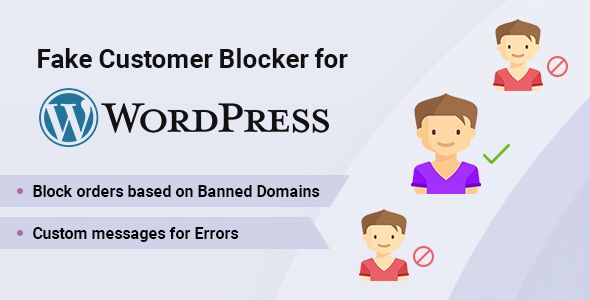
Deconstructing the Threat: Why Fake Registrations Are More Than Just Spam
Before evaluating the solution, it's critical to understand the full scope of the problem. Inexperienced merchants often dismiss fake sign-ups as harmless digital noise. As a developer who has cleaned up the aftermath, I can assure you they are not. The damage is multifaceted.
First, there's database bloat. Every fake user is a row in your wp_users and wp_usermeta tables. Every bogus order adds entries to your WooCommerce tables (wp_posts, wp_postmeta, and the newer WC_Order tables). Over time, this bloat slows down database queries, makes user management unwieldy, and increases the size of your backups. I've seen sites with 10,000 legitimate customers and over 500,000 fake user accounts, grinding admin panel searches to a halt.
Second is the corruption of business intelligence. Your analytics are the lifeblood of your marketing strategy. Fake accounts and orders completely poison this data. Your customer lifetime value (CLV) calculations become meaningless. Your conversion rates are artificially deflated. You can't trust your "Top Customer" reports. Marketing automation sequences get triggered for non-existent people, wasting resources and potentially costing you money if you're using a service that charges per contact.
Third, we have resource consumption and security risks. Spam bots hitting your registration and checkout endpoints consume server CPU and memory. While often minor on a per-request basis, a sustained bot attack can impact site performance for real users. More insidiously, these registration forms can be used for "list bombing" (subscribing a victim's email to hundreds of sites) or to probe for vulnerabilities in your user creation or login processes.
This is the environment into which the Fake Customer Blocker plugin steps. Its job isn't just to stop spam; it's to protect the integrity of your entire e-commerce operation.
Core Functionality: A Multi-Layered Defense Strategy
A good security tool relies on layered defenses, and this plugin appears to follow that principle. It doesn’t bet on a single silver bullet. Instead, it combines several validation techniques that run during the user registration process, primarily hooking into Word

相关文章
热门文章

热门问题

等待解答
推荐专家